



Solid Silicone Rubber
Solid silicone rubber is developed from solidified silicone raw material. To manufacture this type of silicone rubber, manufacturers need to use heating and a roller until the raw material is hot enough to form an elastic mold. The desired hardness of solid silicone rubber is achieved when the mold undergoes a vulcanizer and pressing at high temperatures.
Why Choose Us?
Professional Technical Team
Have a number of highly qualified technical management personnel and with rich practical experience of skilled workers.
Rich Experience
We are a collection of organic silicone new materials research and development, production, sales and service in one of the major raw material manufacturer.
Reliable Product Quality
We have got the certification of ISO9001, REACH , FDA approval and FLGB and OEKO-TEX /ZDHC/ROHS/SVHC/Medical bio-compatibility Certifications.
Wide Market
Products with stable quality and good services ,sold well all over the country and exported to Europe, America, Southeast Asia, more than 50 countries and regions.


Advantages of Solid Silicone Rubber
Temperature Resistance
Temperature Resistance is one of the primary benefits of solid silicone rubber. It has a wide operating temperature range from -55°C to +260°C (depending on the grade chosen), making it suitable for use in extreme temperature environments. Although solid silicone rubber offers a broad operating temperature range in general, HT800 silicone foam rubber, electrically conductive silicone and fluorosolid silicone rubber are specially formulated grades for high-temperature applications, making them ideal for use in industries such as aerospace, automotive and for electrical equipment.
Chemical Resistance
Chemical Resistance is a critical property of solid silicone rubber. It has excellent resistance to many chemicals, oils, and solvents, which makes it ideal for use in harsh chemical environments. MF775 flame retardant solid silicone rubber, electrically conductive solid silicone rubber and FDA approved solid silicone rubber grades offer the best chemical resistance properties.
Water Resistance
Water resistance is a benefit of both silicone sponge rubber and HT800 solid silicone rubber, this is due to the materials closed-cell structure, preventing water absorption and providing excellent sealing properties. These grades are suitable for applications where water resistance is required including outdoor and marine applications for gaskets, seals and weatherstripping.
Resistance to Weathering
Solid silicone rubber is resistant to weathering in general and won’t be affected by sunlight, ozone, ultraviolet light, corona discharge, cosmic radiation, ionising radiation and natural gases that may cause other elastomers to deteriorate.
Electrical Insulation
Electrically conductive solid silicone rubber is specially formulated to provide excellent electrical conductivity and insulation properties. It is ideal for use in applications such as EMI shielding, electrical connectors and cable insulation. Additionally, HT800 silicone and silicone sponge rubber offer the ability to thermally insulate electronic devices and equipment.
Longevity of Life
All grades of solid silicone rubber offer excellent longevity of life in comparison to other elastomeric materials, this is due to silicones ability to resist chemicals, water and weathering in general. The material holds excellent physical properties, allowing it to perform consistently within harsh environments. This makes solid silicone rubber the go to choice of elastomer for applications where long-term performance is required, such as in the aerospace or automotive sectors.
Application of Solid Silicone Rubber


Aerospace & Defence Industry
Solid silicone rubber is a popular material for use in the aerospace and defence industries due to its excellent temperature resistance properties. Frequently used for components such as gaskets, seals, and O-rings, it can withstand extreme temperatures and maintain its elasticity after prolonged use. Specific grades of silicone including electrically conductive solid silicone rubber, solid silicone rubber, fluorosolid silicone rubber and HT800 silicone sponge rubber are among the most common grades used for aerospace and military applications.
Automotive & The Rail Industry
The automotive & rail industry utilises solid silicone rubber in various applications such as gaskets, seals, hoses, and vibration dampening components due to its high-temperature resistance and chemical resistance properties. Specific grades such as silicone sponge rubber, electrically conductive solid silicone rubber and HT800 Silicone are used in automotive applications for noise reduction, thermal insulation, and electromagnetic interference (EMI) shielding. In the rail industry MF775 has been designed specifically for London Underground applications and offers fire retardancy capabilities, making it certified for use on passenger carrying trains.
Electronics Industry
Solid silicone rubber is widely used in the electronics industry due to its electrical insulation properties. Electrically conductive solid silicone rubber is used for EMI shielding and grounding in electronic applications. Meanwhile, silicone sponge rubber and HT800 silicone grades are used as a thermal insulation material for electronic devices.
Food and Beverage Industry
Our standard solid silicone rubber is FDA approved, making it a suitable material for food and beverage applications. It is used in food processing equipment such as gaskets, seals, hoses, and tubing due to its ability to withstand high temperatures, resist chemicals, and avoid bacterial growth. Additionally, metal detectable solid silicone rubber is often used within the sector, predominantly for the process of preventing contamination.
Medical Industry
Solid silicone rubber is widely used in the medical industry due to its biocompatibility and resistance to bacterial growth. FDA Approved solid silicone rubber is used in various medical applications such as implants, tubing, gaskets, and seals. It is also used in surgical tools and devices due to its durability and longevity of life. HT800 can also be used for medical equipment within the industry, as well as for shock and vibration reduction applications.
Construction Industry
Solid silicone rubber is used in the construction industry due to its ability to resist extreme temperatures, chemicals, and weathering in general. It is used in applications such as sealants, adhesives, gaskets, and O-rings. The construction industry uses a range of Silicone grades including FDA Approved silicone, Silicone sponge for applications where the ability to compress is required and MF775 for the construction of the London underground.
What Is the Composition of Solid Silicone Rubber?
The chemical composition of solid silicone rubber is silicon-oxygen. solid silicone rubber means that the main chain is replaced by silicon and oxygen atoms. The silicon atom is usually connected to rubber with two organic groups. Ordinary solid silicone rubber is mainly composed of methyl groups and a small amount of ethylene. The introduction of phenyl can improve the high and low temperature resistance of solid silicone rubber, and the introduction of trifluoropropyl and cyano groups can improve the temperature and oil resistance of solid silicone rubber.
Solid silicone rubber has excellent low temperature resistance and can generally still work at -55 °C. After the introduction of phenyl, it can reach -73℃. The heat resistance of solid silicone rubber is also very prominent. It can work for a long time at 180 °C, and it can withstand a few weeks or longer even if it is slightly higher than 200 °C. It can withstand high temperatures above 300 °C in an instant.
Silica gel is a kind of solid silicone rubber. It belongs to one-component room temperature vulcanized liquid rubber. Once exposed to the air, the silane monomers in the middle will condense to form a network structure. The system is cross-linked, cannot be melted and dissolved, and is elastic. In a rubbery state, they bond objects together. Its thermal conductivity is slightly higher than that of ordinary rubber. Once cured, it is difficult to separate the bonded objects. If it is called according to some chemical books, "silica gel" should be a condensate of silicon dioxide, which is classified as an amorphous substance. Insoluble water and any solvent, non-toxic and tasteless, chemically stable, does not react with any substances except strong alkali and hydrofluoric acid.
The Difference Between Liquid Silicone Rubber and Solid Silicone Rubber
There are many distinguishing factors between liquid silicone rubber and solid silicone rubber, such as
Applications
Solid silicone rubber is used in the manufacturing of everyday consumer products. It is also used on various industrial and mechanical parts in the aviation and automotive industries. On the other hand, liquid silicone rubber is mostly used in healthcare and food products that come in direct contact with the human skin.
Appearance
Liquid silicone rubber is denser in nature and has a higher fluidity. Meanwhile, as the name suggests, solid silicone rubber is available in the form of a solid.
End products
Solid silicone rubber end products are lower in transparency when compared to liquid silicone rubber end products. Solid silicone has an odor, which comes from its vulcanizing agent, whereas liquid silicone rubber is odorless.
What Is the Step by Step Process of Solid Silicone Rubber Production?
Step 1: Isolate silicon from silica
In the first step of producing solid silicone rubber, silicon is isolated from silica. When a large amount of quartz is heated up to 1800 degrees Celsius, we get pure silicon. After giving it some time to cool, the manufacturers grind it into fine powder.
Step 2: Combine powder with methyl chloride
The resultant product of step 1, i.e. pure silicon powder is combined with methyl chloride. When this mixture is heated, it activates the reaction between the components forming methyl chlorosilane. Methyl chlorosilane is a mixture of a lot of components, but the main component is dimethyldichlorosilane. It is a primary building block of solid silicone rubber.
Step 3: Distill the mixture
A complex distillation process is required to separate the numerous components of methyl chlorosilane. Chlorosilanes have different boiling points and this step involves heating the compound to a series of precise temperatures.
Step 4: Add water
After the process of distillation is complete, a combination of water with dimethyldichlorosilane causes hydrochloric acid and disilanol to separate from each other. Post this separation, hydrochloric acid starts acting as a catalyst for the disilanol, causing it to condense into polydimethylsiloxane.
Step 5: Polymerization of the solid silicone rubber
Polymerizing the solid silicone rubber can be done with several different methods, depending on the properties of the finished product you require. Making solid silicone rubber is a pretty simple process and can happen on a mass scale, thus reducing the production cost.
How to Distinguish Between Liquid Silicone Rubber and Solid Silicone Rubber?

Functions in Industry
Liquid silicone rubber, on the other hand, finds much more use in healthcare and food products. These variants are used for applications that need contact with the human skin.
Safety
Appearance
Storage
For liquid silica, however, exposure to higher temperatures may diminish shelf life.
End Products
Solid silicone rubber also emits an odor, which comes from its vulcanizing agent. In contrast, liquid silicone is essentially odorless.
10 Misconceptions About Solid Silicone Rubber
Silicone Is a Chemical Element or Ingredient
Silicones are a family of chemicals with different states like liquid, gel, and solid. Silicone is a nonmetallic chemical element in the carbon family, part of group 14 on the periodic table of elements. solid silicone rubber uses two components to reinforce long polysiloxane chains with specially treated silica. The first component may contain a platinum catalyst that cross-links with the second component, a methyl hydrogen siloxane, and an alcohol inhibitor.
Silicone Rubbers Are Synthetic Materials
Silicone rubbers, including LSRs, are synthetic from the perspective that humans create their synthesis by modifying the chemical element of silicon, which is naturally occurring. However, the raw material is completely natural. Sand, or “silica,” is formed by silicon and oxygen. In fact, for many years, humans have used natural silicon materials in arrowheads and bowls. Silicon is a chemical element — Silica is a silicon dioxide, or sand, used to produce the Silicone family of materials.
Silicone Rubbers Can Only Be Processed and Applied at High Temperatures
Different types of silicones, for example, Room Temperature Vulcanization (RTV) Silicone Rubbers, can be processed and applied at room temperature. If the application requires the use of solid silicone rubber, they can be modified so that they can be molded and vulcanized at low temperatures. This is mainly used in electrical and electronic applications. This high-performance elastomer has good low-temperature flexibility with notably high-temperature resistance too.
Silicone Rubbers Are Tacky
This myth is related to the tactile feel of silicone rubber. Usually, people tend to think that all silicone rubber is sticky. However, it depends on the processing and the application needs. For example, in cable insulation or medical applications using solid silicone rubber, the part’s surface must be smooth, without a sticky feel. The silicone rubber formulation can include Mica, or the processing conditions can be changed.
Silicone Rubbers Are Soft and Flexible
The scale used to measure the silicone hardness is the shore scleroscope, so a rubber band likely has a 25 Shore and roller or skate wheels a 100 Shore. The hardness or durometer can range from 0 to 100 Shore A, from gel like to firm. A common belief is that all silicones have a hardness of less than 40 Shore. So, it may seem that they have low mechanical properties. However, this is not the case.
Silicone Rubbers Generate a Lot of Fumes When They Burn
Some believe that burning silicone rubber generates fumes and gases that would be a disadvantage for certain applications. There are a variety of silicone rubbers, for example processing platinum-cured silicone rubber does not emit excessive gasses, however processing peroxide-cured silicone rubbers have certain ventilation requirements.
Silicone Rubbers Contribute to Atmospheric Contamination
The chemicals that cause environmental contamination are volatile organic compounds (VOCs), such as acetones, alcohols, methacrylates, and acetates, among others that are not present in silicone rubber and more common in plastic materials. Chlorofluorocarbon compounds (CFCs) have an effect on the ozone layer. Due to its inorganic nature, silicone compounds or mixtures do not contain these chemicals that contribute to contamination.
Silicone Rubbers Take Thousands of Years to Degrade
With certain environmental conditions, the silicon-oxygen backbone of solid silicone rubber can split into water, silic acid, and carbon dioxide. Sunlight and atmospheric oxygen create low molecular-weight silicone chains or Cyclopentasiloxane. When buried, soil minerals act as catalysts, accelerating the chain scission and degrading the silicone rubber in days.
Silicone Rubbers Create Allergies and Irritations
This subject is studied closely, and unlike other types of rubbers like natural latex rubber, silicone rubbers do not irritate the skin or create allergic reactions. Silicone allergies are often due to contaminants or other materials in the production of components containing silicone rubbers. The inherent biological inertness of silicone, including solid silicone rubber, is an advantage, they are biocompatible and hypoallergenic.
Silicone Rubbers Bioaccumulate in the Human Body
Bioaccumulation is “the accumulation of a toxic substance in tissues of a living organism. It occurs when the intake rate of the substances is greater than the rate of the excretion or metabolic transformation of the substance”. Silicone rubbers have exhibited compatibility with body fluids and human tissue, with a deficient tissue response with implants, compared with other elastomers. solid silicone rubber may move through the human body if injected or somehow ingested.
Our Factory
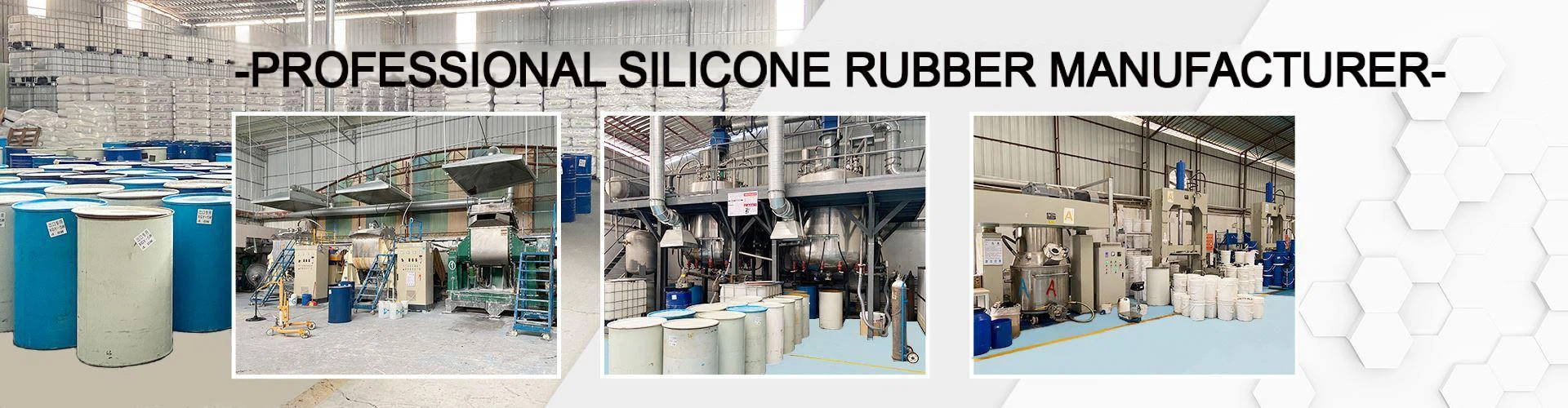
Guangdong Anysil Silicone Co.,LTD was founded in 2017, Located in Guangzhou, China. It is a collection of organic silicone new materials research and development, production, sales and service in one of the major raw material manufacturer. We have formed a product research and development, quality supervision, market operation, service and consulting, etc of a complete operation system. The company has advanced organic silicone production equipment, professional matching analysis, testing scientific instruments and strong production technology, and has a number of highly qualified technical management personnel and with rich practical experience of skilled workers.


Our Certifications
We have got the certification of ISO9001, REACH , FDA approval and FLGB and OEKO-TEX /ZDHC/ROHS/SVHC/Medical bio-compatibility Certifications.


Ultimate FAQ Guide to Solid Silicone Rubber
Q: What are the properties of solid silicone rubber?
Q: What is solid silicone used for?
Q: What is the difference between liquid silicone rubber and solid silicone rubber?
Q: What breaks down silicone rubber?
Q: What is the difference between silicone and silicone rubber?
Q: Why is silicone rubber so expensive?
Q: How many types of silicone rubber are there?
Q: Does alcohol damage silicone rubber?
Q: What is the best alternative for silicone rubber?
Polyetherketone (PEK)
Polytetrafluoroethylene (PTFE)
Q: Can silicone rubber be stretched?
Q: What is silicone rubber good for?
Q: What is the life expectancy of silicone rubber?
Q: Does silicone rubber have a shelf life?
Q: How to harden silicone rubber?
Q: What is part A and b in silicone rubber?
Q: What is the difference between silicon and silicone rubber?
Q: Is burning silicone rubber toxic?
Q: Does silicone rubber shrink when heated?
Q: Does silicone rubber swell?
Q: Is silicone rubber expensive?
We're well-known as one of the leading solid silicone rubber manufacturers and suppliers in China. If you're going to buy high quality solid silicone rubber with competitive price, welcome to get free sample from our factory. Also, customized service is available.