




Industrial Liquid Silicone Rubber
Industrial liquid silicone rubber (LSR) is a biocompatible silicone that can be pumped as a two-component liquid into a mold, before being cured to form a solid. The liquid nature of LSR distinguishes it from high-consistency rubber materials. This material uses additive curing with platinum and requires special treatment in injection molding.
Why Choose Us?
Professional Technical Team
Have a number of highly qualified technical management personnel and with rich practical experience of skilled workers.
Rich Experience
We are a collection of organic silicone new materials research and development, production, sales and service in one of the major raw material manufacturer.
Reliable Product Quality
We have got the certification of ISO9001, REACH , FDA approval and FLGB and OEKO-TEX /ZDHC/ROHS/SVHC/Medical bio-compatibility Certifications.
Wide Market
Products with stable quality and good services ,sold well all over the country and exported to Europe, America, Southeast Asia, more than 50 countries and regions.

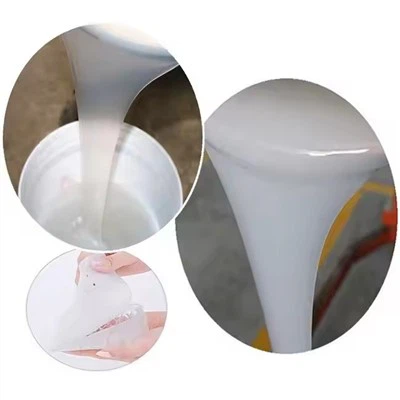


Advantages of Industrial Liquid Silicone Rubber
Chemical Composition of Silicone Rubber
The unique physical properties of silicone rubber are a result of its chemical structure. Silicone rubber is an elastomer consisting primarily of a chain of molecules known as a siloxane bond (-Si-O-Si-). This chain is effectively silicone rubber’s “backbone,” to which a variety of organic chemical groups can be added, altering its mechanical and material characteristics. Silicone rubber is distinguished from other elastomers by the strength of the siloxane bond. Whereas carbon bonds have a binding energy of 355 kJ/mol, the strength of the siloxane bond is 433 kJ/mol. This contributes to its greater heat resistance, chemical stability, and electrical insulation. At the same time, silicone bonds also feature low intermolecular forces, which means that other chemical groups attached to them can rotate freely. As a result, liquid silicone rubber has a high degree of elasticity and compressibility, resilience and weatherability.
Mechanical Properties of LSR
Various grades of silicone rubber have different material properties. This versatility is one reason why LSR is used in so many diverse applications. Whether you have medical products for drug delivery or pumping applications that require strength, flexibility and repeatability, or automotive components that must withstand excessive heat and vibration, liquid silicone’s mechanical properties make it an excellent material choice. Key material properties of silicone rubber include its fast curing and low compression set, its resistance to tearing, heat, water and oil, its transparency and electrical insulation, and its overall strength and long life. You can use LSR at temperatures between -40°C to 200°C (-40°F – 392°F), expose it to wind, rain and UV light for extended periods of time, or immerse it in water, oil or solvents. The various grades of LSR possess material properties that can stand up to even the most demanding applications.
LSR Provides Creative Solutions for Engineering Challenges
LSR is water-resistant and doesn’t break down when exposed to solvents. It’s also available in several hardness levels and a range of colors, making it a versatile option for a wide variety of products. LSR is also a low-vicosity material, meaning it flows very easily during the molding process meaning it is well suited for high cavitation molds used for high output requirements. Products with intricate design features such as undercuts, thin features, small micro-parts, and complex part geometries can be more easily achieved with LSR, allowing product designers added flexibilty and latitude.
Types of Industrial Liquid Silicone Rubber


Self-lubricating
Incompatible fluids can be mixed into the components. Once the silicone cures, this material will bloom to the surface to create a slippery surface. Then, 1.5 to 3 percent of a phenyl fluid is added to the silicone depending on the rate of fluid the customer wants to bloom.
Conductive
Conductive-grade carbon black is added to the LSR components. These grades have very good mechanical properties compared to metal particle filled silicones and can get down to 9 ohm-cm volume resistivity.
Self-bonding
Adhesion promoters are added. This offers primerless adhesion to various substrates. The material works well on glass filled nylons, stainless steel, aluminum and polysulfones. It offers a perfect solution for composite seals to reduce assembly components or provide even better sealing between two mating components.
Radio Opaque
Barium sulfate is added to allow the silicone part to be detected under X-Ray. This works well for medical applications such as wound drains and catheters.
FLSR
Fluorine is reacted to the polymer chain and can be blended typically at 60/40 ratio or a 100 percent fluorosilicone LSR (FLSR) polymer. The benefit is a highly resistant silicone for fuels and oils. Typically, these FLSR won’t meet current MIL standards for fluorosilicone. At the present time there is no FDA food grade or medical polymers.
Flame Retardant
Most LSR rubber will meet a UL 94 HB rating without any additives. Higher ratings, like V1 or VO, require additives that release water when decomposed.
Fast Cure
Just like with an ethylene propylene where a terpolymer with double bonds is added, a manufacturer of LSRs can determine the level of crosslinking of the elastomer by controlling the amount of functional groups that are added as cure sites in the material. This results in higher reactivity to produce very quick cycle times for mass production of silicone parts.
How Industrial Liquid Silicone Rubber Molding Works?
The world of manufacturing is filled with various techniques designed to create high-quality, durable products. One such technique, which has gained significant popularity in recent years, is liquid silicone rubber (LSR) injection molding. This technique has transformed the production of versatile parts for industries ranging from healthcare to electronics, providing high quality and durable products.
Liquid Silicone Rubber is a high-quality performance elastomer that exhibits phenomenal resistance to extreme temperatures, including a wide range of temperatures, weather conditions, and water. Its unique properties make it an ideal choice for an array of applications, particularly those requiring durability, flexibility, and biocompatibility in medical applications, elastomers.
LSR injection molding is a robust and versatile technique that leverages the distinct qualities of liquid silicone rubber injection molding to create a variety of parts with complex geometries. The process utilizes a closed-loop system, which enhances the production efficiency and minimizes the chances of contamination, a critical aspect for industries like healthcare, where hygiene is paramount. Liquid silicone injection molding is a popular method used in the production of medical devices, automotive parts, and consumer goods.

Liquid Silicone Rubber (LSR) is a two-component system, where long polysiloxane chains are reinforced with specially treated silica. Component A contains a platinum catalyst and Component B contains methylhydrogensiloxane as a cross-linker and an alcohol inhibitor. The primary differentiator between liquid silicone rubber (LSR) and high consistency rubber (HCR) is the “flowable” or “liquid” nature of LSR materials. While HCR can use either a peroxide or a platinum curing process, LSR uses only additive curing with platinum. Due to the thermosetting nature of the material, liquid silicone rubber injection molding requires special treatment, such as intensive distributive mixing, while maintaining the material at a low temperature before it is pushed into the heated cavity and vulcanized.
Properties of Industrial Liquid Silicone Rubber Parts
Chemically Inert
Liquid silicone rubber has an organic backbone and is therefore inert, meaning it does not react chemically with other chemicals. Industrial liquid silicone rubber is also resistant to damage from water, oxidation, UV rays, ozone, and radiation, as well as a variety of alkali or acid products. For products subjected to frequent cleaning, exposed to water and moisture, used outdoors or in other harsh environments, Industrial liquid silicone rubber has the chemical properties to perform well in these conditions.
Hypoallergenic
Inherently hypoallergenic and non-toxic, LSR will not cause irritation or allergic reactions with contact, even in those with sensitive skin. For respiratory products such as oxygen and CPAP masks, or products like earbuds, hearing aids, or wearable monitoring devices worn for extended periods of time, LSR provides a safe and comfortable solution.
Biocompatible
LSR’s molecular structure also contributes to its biocompatibility. It is odorless and does not have a taste. Because it also complies with Food and Drug Administration (FDA) requirements, it is widely used in baby products and other food- and beverage- related products.
Physical Properties
LSRs physical and thermal stability properties are exceptional and the reason why LSR is the preferred choice over other elastomeric polymers. Industrial liquid silicone rubber maintains its physical properties in a wide range of temperatures – both high and low temperatures, ranging from -40 degrees Celsius to 200 degrees Celsius, depending on the grade.
● Additional physical characteristics include:
● Compression set: LSR parts will retain their shape when compressed
● Surface: LSR has a naturally smooth texture
● Modulus: LSR offers flexibility and rigidity
● Seals: LSRs are widely chosen for their sealing attributes
● Responsive: Sensitive, responsive, and ideal for delicate sensing membranes
● Insulative: Naturally insulating – electrically and thermally
● Hardness: Available in a range of durometers, most commonly used are 10 to 80 Shore A durometers
Industrial Liquid Silicone Rubber Parts Production Steps
The uncured liquid silicone is contained in two containers, Compound A and Compound B, which connect to the pumping system. container A holds the base-forming material, and container B contains a catalyst. A metering unit automatically releases the two substances at a constant one-to-one ratio, as well as an additional color pigment for color parts.
The molder programs and customizes the automated injection-molding machine to control the injection settings for delivery of the appropriate shot size for each job. The platens and pistons align and close the mold and have settings for the temperature, pressure, injection rate, and cycle time adjusted to meet the customer part designs.
After the completion of the setup, the molding machine heats the mold’s cavities to the appropriate temperature and applies the appropriate clamping force. The mold closes in coordination with the machine’s injector, pump, and supply. The injection mechanism then pushes the material into the mold cavities.
A combination of heat and pressure applied to the liquid silicone rubber cures the material until it solidifies. Upon completion of the cycle, the mold opens for the demolding of the parts. The parts are removed and separated with an automated robotic parts removal system. In less sophisticated manual molding operations with smaller production runs, a worker removes the parts.
After the demolding and parts removal process, if post-molding secondary operations are required, these processes are performed after the molding is complete. Secondary operations could include slitting, printing, marking, assembly, or post-curing. Some advanced molders automate these steps and perform the value-added secondary processes immediately upon the parts removal from the mold. The molded parts are robotically removed from the molding machines and delivered to a designated station for completion of the secondary process, within the same manufacturing cell.
10 Facts About Industrial Liquid Silicone Rubber That Every Rubber Expert Should Know
Great Resistance
LSR has a high resistance to water, ozone and weather, making it a great sealing material for outdoor applications that may be exposed to various weather conditions over an extended period of time.
Medical Grade Properties
The medical industry has very strict guidelines for the materials and devices they use. Rigorous sterilization processes and biocompatibility testing are required in order for a material to be accepted as medical grade. LSR is able to be stripped of extractable and successfully applied in various medical applications.
Self-Lubricating
LSR can be mixed in specific ways to adopt desirable characteristics. In order to make the rubber self-lubricating, incompatible fluids are mixed into the silicone components. Once the rubber cures, the liquids will rise to the surface, creating a slippery, lubricating texture.
Food Grade Capabilities
Food grade LSR is favorable in many different applications because it is tasteless, odorless, naturally transparent and maintains its mechanical properties over time. Food grade LSR is often used in baby care products, household utensils and gaskets and seals for cooking appliances.
Thermal Stability
LSR has high thermal stability and can withstand extreme temperatures ranging from -85° to +400°F. LSR also retains its flexibility at low temperatures, making it an ideal sealing solution for applications exposed to the cold.
Electrically Conductive
By adding conductive-grade carbon black to LSR components, electrically conductive LSR is formed. This grade has very high-functioning mechanical properties and can resist down to 9 ohm-cm volume.
Reduced Cycle Times
With fast cure times, LSR can be produced quickly and in large quantities, making it easy for manufacturers to mass-produce LSR parts. By controlling the number of functional groups that are added to the cure site, LSR experiences higher reactivity that quickens the pace of cure.
Services the Automotive Industry
Chemical and temperature resistance allows LSR to be a resourceful sealing material for a variety of automotive applications. Some of the most popular include comfort and driving assistance parts, engine components, seals for data connectors, headlight gaskets and LED diffusers.
Sanitary Solutions
LSR is hypoallergenic, mold-resistant and mildew-resistant, making it a desirable sealing material for any industry with strict sanitation guidelines. Often used for consumer products, some of the most common places to find LSR include showerheads, dishwasher gaskets, cooking utensils, cleaning supplies and items used for bathing.
Easily Pigmented
LSR is naturally a clear material, allowing customers to choose their preferred color. Adding color pigment to LSR is generally a simple task and does not change the chemical properties of the material.
Our Factory
Guangdong Anysil Silicone Co.,LTD was founded in 2017, Located in Guangzhou, China. It is a collection of organic silicone new materials research and development, production, sales and service in one of the major raw material manufacturer. We have formed a product research and development, quality supervision, market operation, service and consulting, etc of a complete operation system. The company has advanced organic silicone production equipment, professional matching analysis, testing scientific instruments and strong production technology, and has a number of highly qualified technical management personnel and with rich practical experience of skilled workers.


Our Certifications
We have got the certification of ISO9001, REACH , FDA approval and FLGB and OEKO-TEX /ZDHC/ROHS/SVHC/Medical bio-compatibility Certifications.


Ultimate FAQ Guide to Industrial Liquid Silicone Rubber
Q: What is the difference between liquid silicone rubber and silicone rubber?
Q: How long does it take for liquid silicone rubber to cure?
Q: What are the advantages of liquid silicone rubber?
Q: How long does liquid silicone take to dry?
Q: What is the temperature limit for liquid silicone rubber?
Q: Is Liquid Silicone rubber waterproof?
Q: What is the lifespan of silicone rubber?
Q: What happens if silicone sealant gets wet before it cures?
Q: Why is liquid silicone so expensive?
Q: Is liquid silicone rubber safe?
Q: What will silicone not stick to?
Q: How to speed up silicone curing?
Q: How do you cure liquid silicone rubber?
Q: What temperature does liquid silicone rubber cure at?
Q: Is liquid silicone rubber flammable?
Q: Can you apply liquid rubber in rain?
Q: What is the shelf life of liquid silicone rubber?
Q: What breaks down silicone rubber?
Q: What degrades silicone rubber?
Q: How to harden silicone rubber?
We're well-known as one of the leading industrial liquid silicone rubber manufacturers and suppliers in China. If you're going to buy high quality industrial liquid silicone rubber with competitive price, welcome to get free sample from our factory. Also, customized service is available.