




Liquid Silicone Rubber for Consumer Products
Liquid silicone rubber for consumer product is well-suited for consumer products manufacturing applications. Highly versatile and possessing the ability to withstand extreme temperatures, food grade LSR is an excellent choice for everything from kitchen products such as plastic grips for utensils and cooking tools, ice cube trays and baking molds. Additionally, food grade LSR works well with any industrial equipment that comes in contact with or is exposed to food due to its easy sterilization and compression set.
Why Choose Us?
Professional Technical Team
Have a number of highly qualified technical management personnel and with rich practical experience of skilled workers.
Rich Experience
We are a collection of organic silicone new materials research and development, production, sales and service in one of the major raw material manufacturer.
Reliable Product Quality
We have got the certification of ISO9001, REACH , FDA approval and FLGB and OEKO-TEX /ZDHC/ROHS/SVHC/Medical bio-compatibility Certifications.
Wide Market
Products with stable quality and good services ,sold well all over the country and exported to Europe, America, Southeast Asia, more than 50 countries and regions.

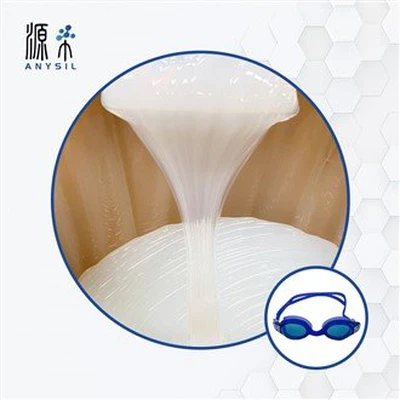


Advantages of Liquid Silicone Rubber For Consumer Products
Higher Level of Safety
Liquid silicone rubber for consumer products is formulated to be safer than solid silicone rubber and HTV. And they typically see a lot of use for food-grade and medical-grade applications. That’s hardly surprising since liquid silicone has hypoallergenic properties. It can resist mold and bacteria growth, perfect for products that come into contact with food and human skin. It’s also non-corrosive and the most non-toxic of all silicone rubber variants. Because of these qualities, LSRs can easily meet FDA, UPS, ISO, and CFR standards.
Produces More Accurate and Stable Designs
Liquid silicone rubber for consumer products are injection-molded to shape the polymer into the desired form and function. For this process, manufacturers use a needle valve to control the material injected into the mold. You can adjust this valve to get the desired speed and pressure. Because of this versatility, you can achieve a design that’s stable and accurate. Liquid silicone rubber for consumer products are also denser than solid silicone rubber, so they can flow much better in tiny mold spaces, producing more precise shapes.
Superior Properties
Liquid silicone rubber has more remarkable properties compared to solid silicone and HTV. End products can resist a broader range of operating temperatures. This temperature ranges from -50 °C to 300 °C. Liquid silicone rubber for consumer products also have a broader range of hardness that comes in at 10 to 80 using a Shore A durometer. And they also typically have better electrical insulation and environmental resistance.
Higher Production Efficiency
LSR production is much quicker compared to solid silicone. And it also provides more in terms of production output. Solid silicone is compression molded. And once milled, you’ll need to trim it down to get the right size and thickness for molding. Long story short, the process will take longer, along with the curing time. On the other hand, liquid silicone has a shorter curing time and a faster overall production process. The molding starts when the injection machine extracts the A and B groups from its barrel at a 1:1 ratio. The extracts are then thoroughly mixed and injected into the mold cavities under the desired speed and pressure. Because of the shorter cure time, the LSR goes out into the mold with little to no rubber flashings.
Types of Liquid Silicone Rubber For Consumer Products


Self-lubricating
Incompatible fluids can be mixed into the components. Once the silicone cures, this material will bloom to the surface to create a slippery surface. Then, 1.5 to 3 percent of a phenyl fluid is added to the silicone depending on the rate of fluid the customer wants to bloom.
Conductive
Conductive-grade carbon black is added to the LSR components. These grades have very good mechanical properties compared to metal particle filled silicones and can get down to 9 ohm-cm volume resistivity.
Self-bonding
Adhesion promoters are added. This offers primerless adhesion to various substrates. The material works well on glass filled nylons, stainless steel, aluminum and polysulfones. It offers a perfect solution for composite seals to reduce assembly components or provide even better sealing between two mating components.
Radio Opaque
Barium sulfate is added to allow the silicone part to be detected under X-Ray. This works well for medical applications such as wound drains and catheters.
FLSR
Fluorine is reacted to the polymer chain and can be blended typically at 60/40 ratio or a 100 percent fluorosilicone LSR (FLSR) polymer. The benefit is a highly resistant silicone for fuels and oils. Typically, these FLSR won’t meet current MIL standards for fluorosilicone. At the present time there is no FDA food grade or medical polymers.
Flame Retardant
Most LSR rubber will meet a UL 94 HB rating without any additives. Higher ratings, like V1 or VO, require additives that release water when decomposed.
Fast Cure
Just like with an ethylene propylene where a terpolymer with double bonds is added, a manufacturer of LSRs can determine the level of crosslinking of the elastomer by controlling the amount of functional groups that are added as cure sites in the material. This results in higher reactivity to produce very quick cycle times for mass production of silicone parts.
The Versatility of Liquid Silicone Rubber in Various Environmental Conditions
LSR which is considered as a highly elastically type of durable man made material attains its wide usage in special weathers. The main positive feature of the material frame LSR is high-temperature resistance. This isn’t only its distinctive functionality in all elevated and low temperature uses. This would mean that o-rings and seals offer a top ranking among those that are best for applications which are continuously exposed to messy and harsh environment.
Last but not least, LSR is well-known for its great UV, ozone, and weathering shelter, which makes it another viable option for outdoor purposes. First of all, thanks to its ability to conform to the necessary forms and to maintain properties no matter the temperature changes it is a suitable material for many different conditions.
Apart from that, LSR resist most chemicals, oils and solvents thus being ideal to be used as the face to face contact with them does not occur in the industries where chemical substances exposure is a common thing. The chemical compatibility not only lead to this development but also helped to improve product reliability and toughness of o-rings and seals made from LSR even for extreme corrosive settings.
The liquid silicone rubber (LSR) demonstrated an unparalleled versatility in all sorts of environmental circumstances, making it high on the priority list for o-ring and seals assemblies where high-performance, strength, and resilience play a major role.
The Process of Liquid Silicone Rubber Molding
Mixture Preparation
To ensure the proper performance and characteristics of the final product, the liquid silicone rubber mixing process is prepared by accurately measuring and mixing two components – the base silicone and the catalyst. In addition, pigments and additives, including pigment, can be added to achieve specific color or enhance the material’s properties. The mixture is carefully homogenized to ensure uniform distribution of components throughout the silicone. Temperature stabilization systems can also be utilized to control and stabilize the temperature of the silicone, ensuring consistent curing. Low compression set is an important characteristic of liquid silicone rubber, which makes it ideal for applications where sealing and cushioning are required.
Insert Placement
In some cases, the final product may require the incorporation of internal parts or inserts such as gaskets. These inserts, which can be made of various materials, must be properly positioned within the mold before the injection process. The molds are designed with specific features to accommodate the placement of these inserts, ensuring they are properly embedded within the silicone coating during the injection process. If the inserts are not properly positioned, it can lead to defects such as cavity formation, which can compromise the quality of the final product.
Mold Heating
Heating is an essential step in the liquid silicone rubber molding process. The mold is typically warmed through the circulation of water in the mold’s cooling channels or by utilizing electric heaters. This makes the material flow better when it’s injected into the mold. In some cases, a cold runner system may be incorporated to maintain specific areas of the mold at a lower temperature to prevent premature curing or excessive material waste. The temperature required in this process depends on the different materials. The melting point and specific gravity of different materials will lead to temperature differences.
Injection
Once the mold is heated and ready, it is closed, and the liquid injection molding process begins. Putting the silicone mix into the mold with high pressure makes sure it fills up all the mold’s spaces and pathways. How long the injection process takes can vary, and it depends on things like how strong the injection pressure is and how thick the silicone is. Optimal injection parameters are determined through extensive testing and optimization to achieve the desired product quality and prevent oxidation.
Curing
Once the mold gets packed with liquid silicone rubber, the mold’s temperature is meticulously elevated to speed up the curing, or hardening, process.This elevated temperature promotes the crosslinking of the polymer chains within the silicone material, transforming it from a liquid state into a solid state. The cycle time for curing and the temperature are precisely controlled to ensure complete and uniform curing throughout the material. Platinum catalyst is often used to speed up the curing process and ensure a high-quality final product with fast cure.
Cooling and Demolding
Once the curing process is complete, the mold is cooled down to solidify the silicone further. The product is then taken out from the mold, a process which is known as demolding. Depending on the specific cooling requirements, the demolded product may be cooled further in ambient conditions. This final cooling step ensures that the product achieves its final dimensions and properties before it is ready for further processing or use.

Considerations When Selecting Liquid Silicone Rubber
Cost
Liquid silicone rubber tends to be more expensive than organic elastomers. The price premium may be justified for critical applications where performance outweighs cost.
UV Resistance
LSR has only moderate UV resistance compared to fluorosilicone and EPDM. Additional stabilization is required for outdoorexposure.
Tear Strength
LSR has lower tear strength compared to some other flexible materials. It is important to design appropriate product geometries to avoid rips and tears.
Adhesion
Joining or bonding LSR to itself and other materials can require specialized chemical treatments. Proper surface preparation is key.
Strength
While flexible, LSR has lower tensile strength than many common plastics and metals. Careful structural design is necessary when replacing other materials with LSR.
Future Outlook of Liquid Silicone Rubber Phone Case Technology
nnovations in LSR Molding
The future of liquid silicone rubber (LSR) molding in phone case technology looks bright, with continuous innovations shaping its path. We’re likely to see advancements in LSR materials that enhance durability and flexibility, allowing for even thinner, lighter, and more resilient phone cases. There’s potential for integrating new types of fillers to create liquid silicone rubber composites with enhanced properties like improved thermal conductivity or increased shock absorption. Another area of innovation could be in the molding process itself, such as using 3D printing techniques to create more complex and customized molds, further pushing the boundaries of design possibilities in phone cases.
Predictions for Future Trends and Developments
The demand for personalized and functional phone accessories is expected to grow, with consumers seeking products that reflect their personal style while offering optimal protection. This trend will likely drive the development of more customizable LSR phone cases, possibly incorporating user-customizable elements or smart features like built-in sensors or self-repairing materials. The sustainability aspect will also play a crucial role, with more research going into eco-friendly materials and production processes that minimize environmental impact. We might also see the integration of technology such as embedded electronics for additional functionalities, turning phone cases into more than just protective accessories.
Chemical Compatibility of Liquid Silicone Rubber
The chemical composition of Liquid Silicone Rubber (LSR) makes it the perfect candidate for silicone prototyping. It is unique in comparison to many common elastomers. The inherent properties of LSR make it an ideal choice for uses in specific chemical environments, as well as for silicone prototyping.
The silicone-oxygen backbone of LSR has a higher bond strength than that of polyethylene or of a carbon-based material, and it is therefore mostly chemically inert. This inertness, as well as its natural hypoallergenic properties, make LSR a prime candidate for food, medical applications, and silicone prototyping.
In comparison with other rubber materials, LSR is exceptionally compatible with many diluted solutions of inorganic acids and bases (e.g., acetic acid, arsenic acid, boric acid, sulfuric acid, tartaric acid). Extending the variety of uses of LSR products, such as hosing and seals, to the medical, food manufacturing, and automotive industries, LSR can be used as a propellant in food products, as filler for vehicle airbags or for silicone prototyping. The extensive list of LSR-compatible materials also includes ammonium hydroxide, ammonium phosphate, and alcohol bases, which are common ingredients of many household products.
LSR is highly suitable for use with water and ozone (which can be used in small quantities as a treatment for drinking water). This broadens the potential uses for LSR hoses, bellows, seals, and other components for municipal water systems or even agricultural irrigation systems. While this application may not seem exceptional, many other seal and hose materials expand over time, age, and crack under differential flow conditions or are unable to maintain mechanical integrity under varying internal and external temperatures. This same concept extends to the automotive industry, where LSR’s compatibility with many industry-standard oils and high-temperature air makes it an ideal candidate for gaskets, bellows, and electrical connectors among other applications.
Our Factory
Guangdong Anysil Silicone Co.,LTD was founded in 2017, Located in Guangzhou, China. It is a collection of organic silicone new materials research and development, production, sales and service in one of the major raw material manufacturer. We have formed a product research and development, quality supervision, market operation, service and consulting, etc of a complete operation system. The company has advanced organic silicone production equipment, professional matching analysis, testing scientific instruments and strong production technology, and has a number of highly qualified technical management personnel and with rich practical experience of skilled workers.


Our Certifications
We have got the certification of ISO9001, REACH , FDA approval and FLGB and OEKO-TEX /ZDHC/ROHS/SVHC/Medical bio-compatibility Certifications.


Ultimate FAQ Guide to Liquid Silicone Rubber For Consumer Products
Q: What is liquid silicone rubber used for?
Q: What is the difference between liquid silicone and regular silicone?
Q: Why is liquid silicone so expensive?
Q: What is the shelf life of liquid silicone rubber?
Q: What is the alternative to liquid silicone rubber?
Q: What is the difference between solid silicone rubber and liquid silicone rubber?
Q: Is liquid silicone waterproof?
Q: Is liquid silicone bad for the Environment?
Q: Is liquid silicone body safe?
Q: How long does liquid silicone take to dry?
Q: What are the advantages of liquid silicone rubber?
Q: How do you store liquid silicone?
Q: What is the mix ratio for liquid silicone rubber?
Q: What is the solvent for liquid silicone rubber?
Q: How long does liquid silicone rubber take to cure?
Q: What is the cure temperature for LSR?
Q: What happens if silicone sealant gets wet before it cures?
Q: What happens if it rains after applying silicone?
We're well-known as one of the leading liquid silicone rubber for consumer products manufacturers and suppliers in China. If you're going to buy high quality liquid silicone rubber for consumer products with competitive price, welcome to get free sample from our factory. Also, customized service is available.