

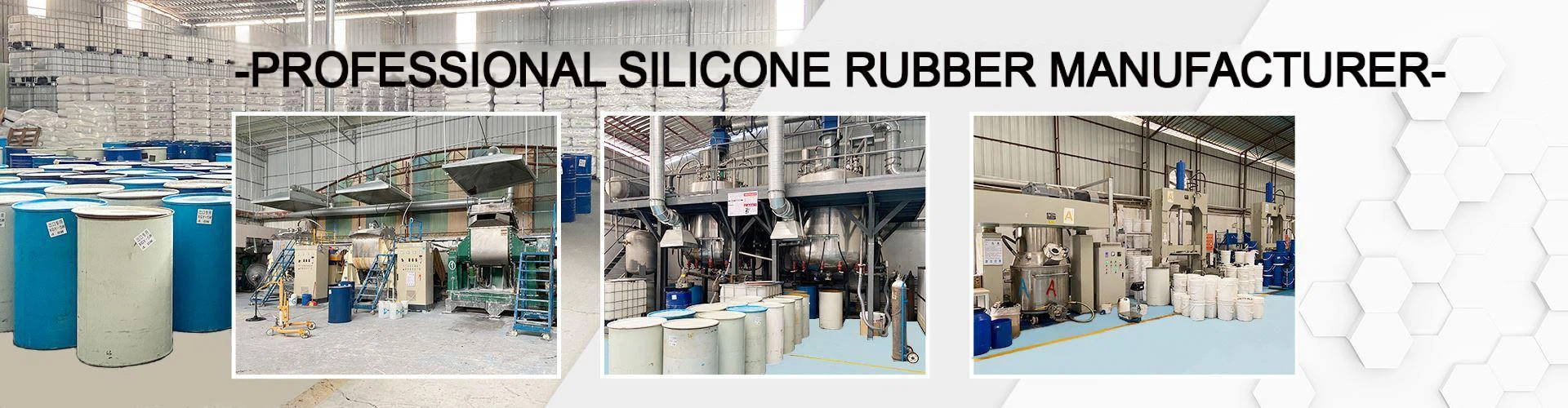


Liquid Silicone Rubber (LSR), as a high-performance elastomer material, finds widespread application in various fields such as healthcare, automotive, electronics, and food industries. Its unique physical and chemical properties, such as excellent resistance to high and low temperatures, good insulation, and biocompatibility, make Liquid Silicone Rubber an indispensable material in many industries. The raw materials used to produce LSR mainly include the following categories:
1. Silicone Monomers
Silicone monomers form the fundamental raw materials for the production of Liquid Silicone Rubber. Among the most commonly used are cyclic siloxanes (D4) and methyltrichlorosilane. These monomers undergo specific chemical reactions to form the backbone structure of Liquid Silicone Rubber. The proportion and reaction conditions of different silicone monomers directly influence the final properties of LSR, such as hardness, tensile strength, and heat resistance.
2. Crosslinking Agents
Crosslinking agents play a critical role in the production of LSR. They form chemical bonds between silicone monomers, linking the originally linear molecular chains into a three-dimensional network, thus imparting elasticity and strength to LSR. Common crosslinking agents include inorganic substances like silica, calcium carbonate, and titanium dioxide, as well as certain organic peroxides. The type and amount of crosslinking agent used significantly affect the crosslink density, curing speed, and other properties of LSR.
3. Catalysts
Catalysts are essential in the production process of Liquid Silicone Rubber. They promote the reaction between silicone monomers and crosslinking agents, accelerating the curing process of LSR. Commonly used catalysts include platinum catalysts and tin catalysts. Platinum catalysts, due to their efficiency, non-toxicity, and environmental friendliness, have found wide application in the production of Liquid Silicone Rubber.
4. Additives
To improve the processing performance, physical properties, or impart special functions to LSR, certain additives are added. These additives include silicone oil, diatomaceous earth, antioxidants, pigments, etc. Silicone oil can increase the flowability of LSR, making it easier to process, while diatomaceous earth can enhance its wear resistance and weatherability. Antioxidants help to effectively extend the service life of Liquid Silicone Rubber.
LSR Production Process The preparation of Liquid Silicone Rubber typically involves the following steps:
Raw Material Preparation: Accurately weigh the silicone monomers, crosslinking agents, catalysts, and additives according to the formula requirements.
Mixing Reaction: Place the measured raw materials into a reaction kettle for mixing and reaction. Under the action of the catalyst, the silicone monomers and crosslinking agents undergo crosslinking reactions, forming Liquid Silicone Rubber.
Post-Processing: After the reaction is complete, LSR undergoes post-processing steps such as filtering, defoaming, and drying to remove impurities, bubbles, and moisture, thus improving the purity and stability of the product.
Molding: The treated LSR is injected into molds, where it is cured and shaped through heating and pressure. Depending on the product requirements, different molding processes and equipment may be used.
The main raw materials for Liquid Silicone Rubber include silicone monomers, crosslinking agents, catalysts, and additives. The selection and proportioning of these raw materials directly affect the performance and quality of LSR. Through scientific formulation design and strict process control, high-performance and stable-quality Liquid Silicone Rubber products can be produced to meet the demands of various industries.