

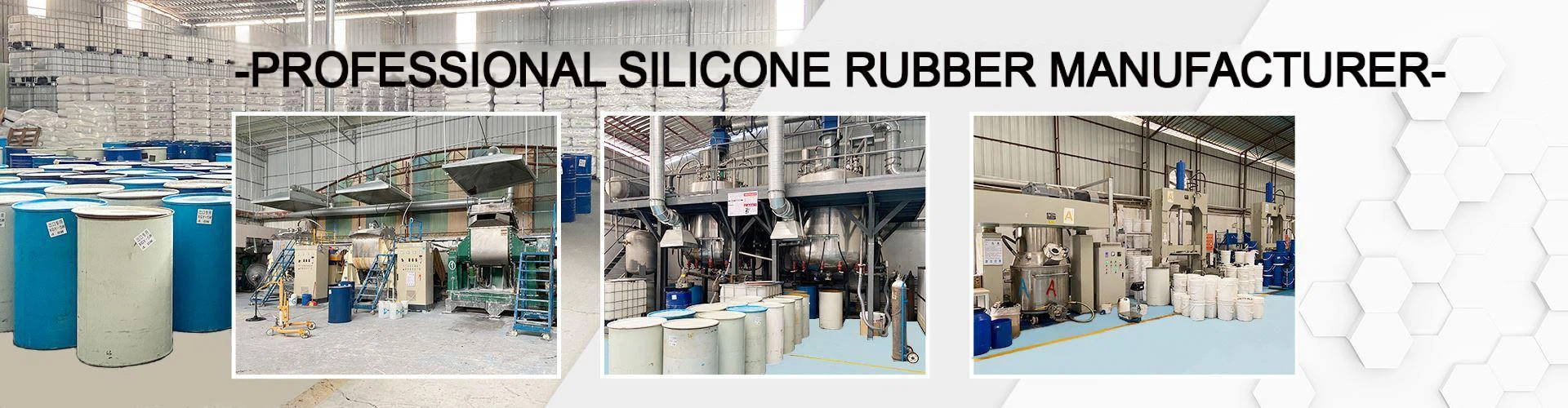


In the preparation process of silicone masterbatch, common errors are mainly concentrated in raw material processing, mixing process, curing condition control and storage management. The following are specific errors and solutions:
1. Raw material processing errors
a.The filler is not fully dried
Error: The water content of the filler (such as fumed silica) is too high, resulting in bubbles or incomplete cross-linking during curing.
Consequence: The strength of the colloid decreases and the bonding performance deteriorates.
Solution: The filler needs to be dried at 100-120℃ for 2-4 hours, and the moisture content is less than 0.5%.
b.Incorrect amount of cross-linker/catalyst
Error: Excessive addition of cross-linker or catalyst leads to too fast curing or poor storage stability.
Consequence: The colloid cures prematurely and cannot be used; the storage period is shortened.
Solution: Add strictly according to the formula ratio, and it is recommended to use an electronic balance for accurate weighing.
c.Raw material mixing
Error: Single-component glue mistakenly uses two-component curing agent, or different types of glue are mixed.
Consequence: Curing fails and the colloid cannot be formed.
Solution: Strictly distinguish raw materials, mark clearly, and avoid cross contamination.
2. Mixing process error
a.Mixing temperature is too high
Error: The temperature exceeds 80℃ during mixing, causing the prepolymer to crosslink prematurely.
Consequence: The viscosity of the colloid increases dramatically and construction cannot be carried out.
Solution: Use a cooling water circulation system to control the mixing temperature at 60-80℃.
b.Insufficient mixing time
Error: The filler is not fully dispersed and the colloid has a granular feel.
Consequence: Uneven performance affects the bonding strength.
Solution: Knead at high speed for at least 30 minutes and check the filler dispersion regularly.
c.Incomplete degassing
Error: The vacuum degassing time is too short or the vacuum degree is insufficient, and bubbles remain in the colloid.
Consequence: The surface is uneven after curing and the strength decreases.
Solution: The vacuum degree is not less than -0.09MPa, and the degassing time is extended to 15-30 minutes.
3. Incorrect curing conditions
a.Curing temperature is too low
Error: The two-component glue is cured at low temperature and the crosslinking is incomplete.
Consequence: The colloid has low hardness and poor temperature resistance.
Solution: Ensure that the curing temperature is between 120-150℃, and use an oven for heating if necessary.
b.Insufficient curing time
Error: The one-component adhesive is not fully cured before being put into use.
Consequences: Insufficient bonding strength and easy to fall off.
Solution: The one-component adhesive needs to be cured for at least 24 hours, and the two-component adhesive needs to be cured according to the time required by the formula.
c.Improper environmental humidity
Error: The one-component adhesive is cured in a dry environment, and insufficient moisture leads to slow curing.
Consequences: The curing time is extended, affecting production efficiency.
Solution: The humidity of the one-component adhesive curing environment is controlled at 40-60%.
4. Storage management errors
a.Storage temperature is too high
Error: The adhesive is exposed to high temperature for a long time, resulting in reduced catalyst activity.
Consequences: The curing speed slows down or even fails to cure.
Solution: The storage temperature is controlled at 5-25℃ to avoid direct sunlight.
b.Damaged packaging
Error: The adhesive packaging is not tightly sealed, and moisture or impurities enter.
Consequences: The one-component adhesive is cured prematurely, and the crosslinker of the two-component adhesive fails.
Solution: Use aluminum foil bags or iron drums with good sealing properties, and use as soon as possible after opening.
c.Cross contamination
Error: Mixing of different batches or models of rubber materials leads to unstable performance.
Consequences: The performance of product batches varies greatly, affecting quality control.
Solution: Store in partitions, clearly mark, and avoid mixing.
5. Equipment and operation errors
a.Incomplete equipment cleaning
Error: Kneading machine and mold are not cleaned thoroughly, and old rubber materials remain.
Consequences: The performance of new rubber materials is affected and impurities appear.
Solution: Clean the equipment thoroughly after each use and wipe it with a special solvent.
b.Unprofessional operators
Error: Untrained operators adjust the formula or process at will.
Consequences: Poor product consistency and increased scrap rate.
Solution: Develop standard operating procedures (SOPs) and train operators regularly.
Summary and suggestions
Error type Common manifestations Preventive measures
Raw material processing Water content in fillers, excessive catalyst Strict drying, accurate weighing
Mixing process Too high temperature, incomplete degassing Control temperature, extend degassing time
Curing conditions Insufficient temperature/time, improper humidity Cure according to process requirements, control environmental humidity
Storage management Too high temperature, damaged packaging Low temperature storage, sealed packaging
Equipment and operation Equipment contamination, irregular operation Clean equipment regularly and develop standardized processes
Suggestions:
Regularly calibrate equipment to ensure accuracy.
Establish a quality traceability system to record raw materials and process parameters for each batch.
When an abnormality occurs, stop production immediately and investigate the cause.
By strictly controlling each link, the preparation quality of silicone-based glue can be significantly improved, the scrap rate can be reduced, and the product performance can be ensured to be stable.