

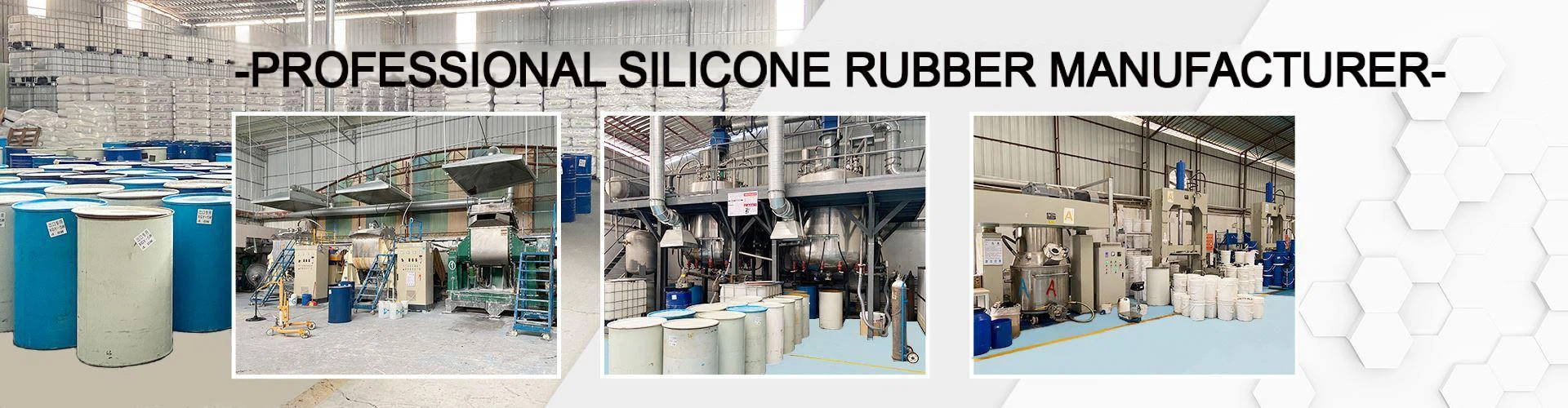


Thermal Stability Analysis of Liquid Silicone Rubber
Liquid silicone rubber (LSR) is widely used in industries such as automotive, medical devices, and electronics due to its excellent flexibility, biocompatibility, and thermal resistance. However, ensuring its thermal stability is crucial for applications in high-temperature environments. Here are various analytical techniques for evaluating the thermal performance of LSR, including thermogravimetric analysis (TGA), differential scanning calorimetry (DSC), dynamic mechanical analysis (DMA), and accelerated aging tests. The results obtained from these methods help in understanding the degradation mechanisms and optimizing the formulation of LSR for enhanced heat resistance.
1. Introduction
Liquid silicone rubber (LSR) is a two-part platinum-cured elastomer known for its superior thermal stability, chemical resistance, and mechanical properties. Unlike conventional rubbers, LSR can withstand temperatures ranging from -50°C to 250°C, making it ideal for demanding applications. However, prolonged exposure to high temperatures can lead to chain scission, oxidation, and loss of mechanical properties. Therefore, assessing the thermal stability of LSR is essential for ensuring long-term performance.
2. Methods for Thermal Stability Analysis
2.1 Thermogravimetric Analysis (TGA)
TGA measures the weight loss of LSR as a function of temperature under controlled atmospheres (e.g., nitrogen or air). Key parameters include:
Onset degradation temperature (T₅%): The temperature at which 5% weight loss occurs, indicating initial thermal stability.
Maximum decomposition temperature (Tₘₐₓ): The peak temperature of degradation.
Residual mass: The remaining material after decomposition, indicating inorganic filler content.
TGA helps identify the thermal degradation profile and compare different LSR formulations.
2.2 Differential Scanning Calorimetry (DSC)
DSC evaluates thermal transitions such as glass transition temperature (Tg), melting points, and curing behavior. For LSR:
Glass transition temperature (Tg): Indicates flexibility at low temperatures.
Exothermic/endothermic peaks: Reveal crosslinking efficiency and thermal stability.
High-temperature DSC scans can detect oxidative stability by observing exothermic reactions in air.
2.3 Dynamic Mechanical Analysis (DMA)
DMA assesses viscoelastic properties under thermal stress. Important parameters include:
Storage modulus (E'): Reflects elastic behavior.
Loss modulus (E"): Indicates viscous dissipation.
Tan δ (E"/E'): Peak temperature correlates with Tg.
DMA helps determine how LSR performs under cyclic thermal loads.
2.4 Accelerated Aging Tests
LSR samples are exposed to elevated temperatures (e.g., 150°C–250°C) for extended periods (e.g., 500–1000 hours) to simulate long-term aging. Post-aging evaluations include:
Hardness changes (Shore A)
Tensile strength and elongation at break
Compression set resistance
These tests predict real-world performance and lifespan.
3. Factors Affecting Thermal Stability
Polymer structure: Phenyl-containing silicones exhibit better heat resistance.
Fillers (e.g., silica, alumina): Improve thermal conductivity and stability.
Crosslinking density: Higher crosslinking enhances thermal endurance.
Additives (e.g., iron oxide, cerium oxide): Act as thermal stabilizers.
4. Conclusion
The thermal stability of LSR can be comprehensively analyzed using TGA, DSC, DMA, and aging tests. These methods provide insights into degradation mechanisms and help optimize formulations for high-temperature applications. Future research should focus on developing novel stabilizers and nanocomposites to further enhance LSR's thermal performance.