

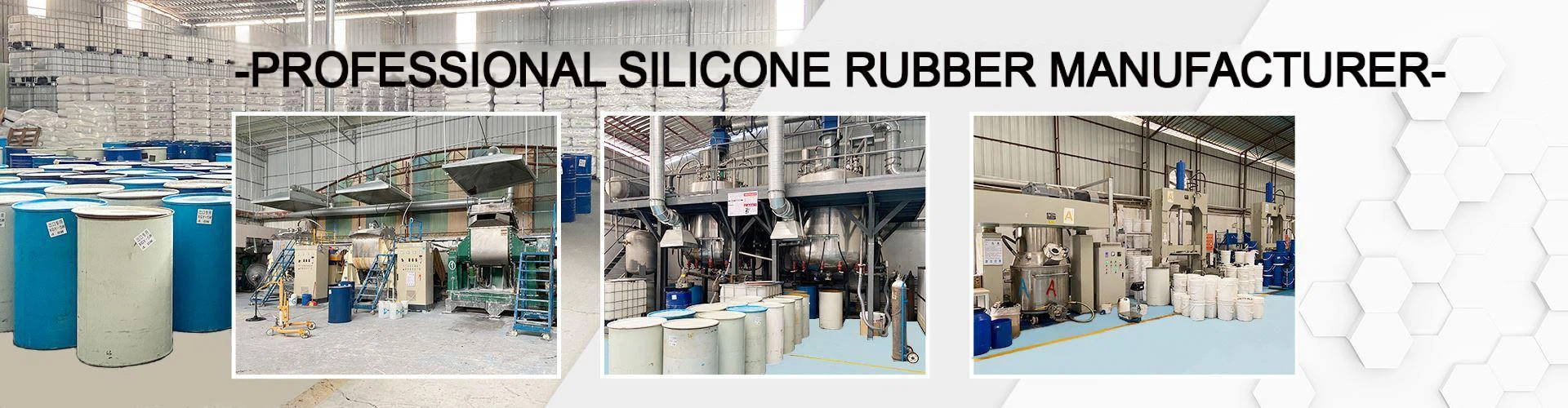


The Fundamental Differences Between Single-Component and Dual-Component Silicone Rubbers
Silicone rubber products are broadly classified into single-component (1K) and dual-component (2K) systems, with each type exhibiting distinct characteristics that determine their suitability for various applications. This article examines the most significant differences between these two formulations, focusing on their curing mechanisms, processing requirements, performance properties, and application domains. Understanding these fundamental distinctions is crucial for proper material selection in engineering and manufacturing applications.
1. Introduction
While both single-component and dual-component silicone rubbers share the basic advantageous properties of silicone materials - including thermal stability, flexibility, and chemical resistance - their chemical formulations and curing behaviors differ substantially. These differences ultimately dictate their respective processing methods, performance characteristics, and ideal use cases.
2. Core Differences
2.1 Curing Mechanism (The Most Fundamental Difference)
The primary distinction lies in their curing chemistry:
Single-Component Silicone Rubber:
Cures via reaction with atmospheric moisture
Typically contains acetoxy, alkoxy, or oxime functional groups that react with water vapor
Curing progresses from the surface inward (limited by moisture diffusion)
Produces byproducts (acetic acid, alcohol, or ketoxime) during curing
Dual-Component Silicone Rubber:
Cures via platinum-catalyzed addition reaction between components
Requires precise mixing of base polymer and curing agent
Cures uniformly throughout the material (not moisture-dependent)
Produces no byproducts during curing (addition cure)
2.2 Processing Requirements
Single-Component Systems:
Ready-to-use directly from packaging
No mixing required
Curing time depends on environmental humidity
Typically applied in thin layers (<10mm)
Often requires primers for adhesion
Dual-Component Systems:
Requires accurate metering and mixing
Needs specialized dispensing equipment
Curing time controlled by temperature
Can be used in thick sections (>10mm)
Generally better inherent adhesion
2.3 Performance Characteristics
| Property | Single-Component | Dual-Component |
|---|---|---|
| Cure Byproducts | Yes (acetic acid/alcohol) | None |
| Cure Depth | Limited by moisture diffusion | Unlimited |
| Cure Speed Control | Difficult (humidity-dependent) | Precise (temperature-controlled) |
| Mechanical Properties | Moderate | Superior |
| Thermal Stability | Good | Excellent |
| Chemical Resistance | Good | Superior |
| Electrical Properties | Good | Excellent |
3. Practical Implications
3.1 When to Use Single-Component Silicone
Applications requiring convenience and simplicity
Field repairs and maintenance
Thin sealants and adhesives
Situations where mixing is impractical
Low-volume production
Temporary applications
3.2 When to Use Dual-Component Silicone
High-performance applications
Medical and food-grade products
Thick cross-sections and complex molds
Precision components
Applications requiring consistent, predictable curing
High-volume production
4. Conclusion
The most fundamental difference between single-component and dual-component silicone rubbers lies in their curing mechanisms, which directly affect their processing methods, final properties, and application suitability. Single-component systems offer simplicity and convenience through moisture-curing chemistry, while dual-component systems provide superior performance and processing control through addition-cure chemistry. This core distinction informs all subsequent differences in mechanical properties, application methods, and performance characteristics, making the curing mechanism the primary consideration when selecting between these two silicone rubber types.