




Liquid Silicone Rubber vs Solid Silicone Rubber: Key Differences Explained
When selecting silicone materials for industrial manufacturing, one of the most common questions is:
Should I choose Liquid Silicone Rubber (LSR) or Solid Silicone Rubber (HSR)?
Although both materials are silicone elastomers with excellent heat resistance and durability, they differ significantly in processing methods, production efficiency, physical properties, and applications.
For manufacturers, engineers, and purchasing professionals, understanding these differences is essential for choosing the right material and reducing production costs.
In this guide, we'll compare Liquid Silicone Rubber vs Solid Silicone Rubber in detail to help you make the best decision for your project.
What Is Liquid Silicone Rubber (LSR)?
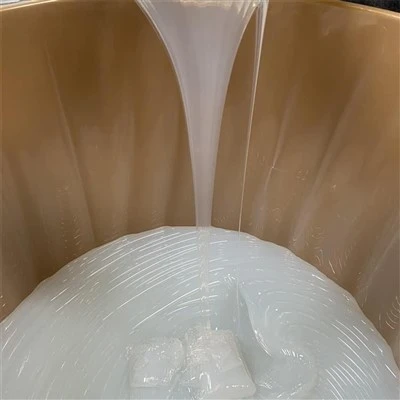
Liquid Silicone Rubber (LSR) is a two-part platinum-cured silicone elastomer supplied in liquid form. It is processed using Liquid Injection Molding (LIM), where Part A and Part B are mixed in a 1:1 ratio and injected into a heated mold.
LSR is widely used in industries requiring high precision, automation, and consistent product quality, including:
Medical devices
Automotive components
Electronics
Baby care products
Wearable devices
What Is Solid Silicone Rubber (HSR)?
Solid Silicone Rubber, often called High Consistency Rubber (HCR or HSR), is supplied as a solid gum-like material. It is processed through:
Compression molding
Transfer molding
Extrusion
Calendaring
Before molding, curing agents and pigments are typically mixed into the material using processing equipment such as two-roll mills.
HSR has been used for decades in industrial manufacturing and remains popular for larger parts and customized production.

Liquid Silicone Rubber vs Solid Silicone Rubber: Comparison Table
| Feature | Liquid Silicone Rubber (LSR) | Solid Silicone Rubber (HSR/HCR) |
|---|---|---|
| Material Form | Liquid | Solid |
| Curing System | Platinum Cure | Peroxide or Platinum Cure |
| Processing Method | Liquid Injection Molding | Compression / Extrusion / Transfer Molding |
| Production Efficiency | High | Medium |
| Automation | Excellent | Limited |
| Flash Generation | Very Low | Higher |
| Precision | Excellent | Good |
| Complex Parts | Excellent | Limited |
| Labor Requirement | Low | Higher |
| Material Waste | Low | Higher |
1. Manufacturing Process
Liquid Silicone Rubber
LSR is designed for fully automated production.
Advantages include:
Automatic mixing
Closed production system
Fast molding cycles
High production consistency
It is ideal for large-volume manufacturing.
Solid Silicone Rubber
HSR requires several manual processing steps before molding:
Material weighing
Mixing
Color blending
Milling
Preforming
As a result, production is slower and more labor-intensive.
Winner: LSR
2. Production Efficiency
Industrial manufacturers increasingly choose LSR because it offers much faster production.
Typical advantages include:
Short molding cycle
Reduced labor costs
Less downtime
Continuous automated production
HSR is better suited for:
Small production batches
Large silicone profiles
Extrusion products
Winner: LSR
3. Precision and Surface Quality
LSR flows easily into complex mold cavities.
It provides:
Excellent dimensional accuracy
Smooth surface finish
Minimal flash
High repeatability
HSR performs well but generally cannot match the precision achieved with injection-molded LSR.
Winner: LSR
4. Mechanical Properties
Both materials offer:
Excellent elasticity
UV resistance
Weather resistance
High temperature resistance
Aging resistance
However, the final performance depends more on the formulation than the material form.
In many applications, both can achieve excellent mechanical properties.
Winner: Tie
5. Medical Applications
Medical manufacturers overwhelmingly prefer Medical Grade Liquid Silicone Rubber.
Reasons include:
Platinum curing
High purity
Excellent biocompatibility
Low volatile content
Suitable for ISO 10993 and USP Class VI compliance
Typical applications:
Catheters
Laryngeal Mask Airways
Endotracheal Tubes
Respiratory Masks
Medical Seals
HSR is used in some medical products but is less common for high-volume precision components.
Winner: LSR
6. Industrial Applications
Liquid Silicone Rubber
Best for:
Automotive connectors
Electrical connectors
Precision seals
Self-lubricating components
Consumer electronics
Solid Silicone Rubber
Best for:
Silicone tubing
Silicone sheets
Extruded profiles
Large gaskets
Industrial rollers
Different applications require different processing technologies.
7. Cost Comparison
Many buyers assume LSR is always more expensive.
In reality:
Material Cost
LSR often has a higher raw material price.
Manufacturing Cost
However, LSR significantly reduces:
Labor costs
Scrap rates
Production time
Maintenance costs
For mass production, LSR often delivers a lower total manufacturing cost.
HSR remains economical for small production runs and products requiring extrusion.
Advantages of Liquid Silicone Rubber
✔ Fully automated production
✔ Excellent precision
✔ Faster molding cycles
✔ Low material waste
✔ Better consistency
✔ Suitable for cleanroom manufacturing
✔ Ideal for medical applications
Advantages of Solid Silicone Rubber
✔ Lower tooling investment
✔ Suitable for extrusion
✔ Flexible formulation
✔ Cost-effective for low-volume production
✔ Ideal for large industrial components
Which Material Should You Choose?
Choose Liquid Silicone Rubber (LSR) if you need:
High-volume production
Precision injection molding
Medical device manufacturing
Automotive components
Complex product designs
Fully automated manufacturing
Choose Solid Silicone Rubber (HSR) if you need:
Extruded silicone products
Compression molding
Small production quantities
Large industrial parts
Lower initial tooling costs
Why Choose ANYSIL SILICONE?
At ANYSIL SILICONE CO., LTD, we specialize in developing high-performance silicone materials for industrial and medical applications.
Our product portfolio includes:
Medical Grade Liquid Silicone Rubber
Industrial Liquid Silicone Rubber
Self-Lubricating LSR
Heat Resistant LSR
Customized Liquid Silicone Solutions
Why Global Customers Choose ANYSIL SILICONE
Advanced manufacturing technology
Stable product quality
Customized formulations
Fast global delivery
Professional technical support
Rich export experience in Europe, North America, and Asia
Whether you need Medical Grade LSR, Industrial LSR, or customized silicone materials, our experienced team can help you select the best solution for your application.
Frequently Asked Questions
Is Liquid Silicone Rubber stronger than Solid Silicone Rubber?
Not necessarily. Both materials can achieve excellent mechanical strength depending on their formulation. However, LSR generally provides better consistency and precision in mass production.
Is LSR more expensive?
The raw material price is often higher, but lower labor costs, faster production, and reduced waste can make LSR more cost-effective overall.
Can Solid Silicone Rubber be used for medical products?
Yes, certain grades can be used for medical applications, but Medical Grade Liquid Silicone Rubber is generally preferred for precision medical components due to its purity, biocompatibility, and compatibility with automated manufacturing.
Conclusion
Both Liquid Silicone Rubber (LSR) and Solid Silicone Rubber (HSR) are outstanding materials, but each serves different manufacturing needs.
If your priority is high-volume production, precision, automation, and medical-grade performance, LSR is the better choice.
If your application involves extrusion, compression molding, or low-volume industrial production, HSR remains an excellent option.
At ANYSIL SILICONE CO., LTD, we provide tailored silicone material solutions for customers worldwide. Our technical team can help you select the most suitable silicone rubber based on your product design, manufacturing process, and performance requirements.
Contact ANYSIL SILICONE today to request a free consultation, technical data sheet (TDS), or product samples.