

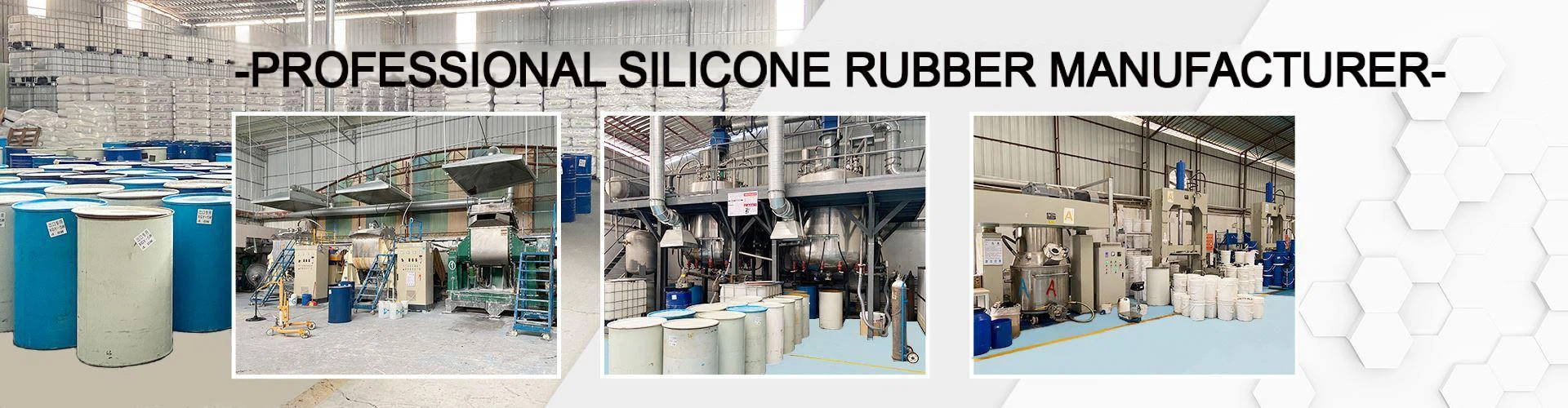


To ensure the stability of the quality of mixed silicone, it is necessary to build a quality management system from multiple dimensions such as raw material control, process standardization, equipment management, process monitoring and personnel training. The following are specific measures and implementation points:
1. Raw material control: Ensure quality consistency at the source
Supplier management
Choose stable suppliers: Prioritize cooperation with raw material manufacturers that have passed ISO 9001 certification to ensure that the performance differences between batches of base glue, curing agent, additives, etc. are small.
Regular audit: Conduct on-site audits of suppliers every quarter to check the raw material production environment, storage conditions and quality inspection process.
Establish raw material files: Record the model, production date, quality inspection report and usage feedback of each batch of raw materials to facilitate tracing problems.
Raw material inspection and pretreatment
Warehousing inspection: Test key indicators such as viscosity, hardness, and curing speed for each batch of raw materials, and return unqualified products directly.
Premixed additives: If pigments, flame retardants, etc. need to be added, first premix with a small amount of base glue to form a masterbatch, and then add the main material in proportion to reduce the risk of uneven dispersion.
Reheating treatment: Silicone stored at low temperature needs to be placed in a 25℃ environment to warm up to room temperature in advance to avoid viscosity differences causing mixing difficulties.
2. Process standardization: Eliminate operating variables
Develop SOP (standard operating procedure)
Clear parameter range:
Stirring speed: 300-500rpm for low-speed premixing, 800-1000rpm for high-speed dispersion.
Stirring time: 3 minutes for low-viscosity silicone and 5 minutes for high-viscosity silicone.
Vacuum degree: below -0.08MPa, degassing time 3-5 minutes.
Posting operation instructions: Place a graphic version of the SOP next to the mixer, marking key steps (such as the order of adding materials, downtime and cleaning time).
Example process:
1. Weigh the base glue (accuracy ±0.1%) →2. Add curing agent →3. Premix at low speed for 2 minutes →4. Scrape the wall to clean →5. Disperse at high speed for 4 minutes →6. Vacuum degassing for 3 minutes →7. Stand and degas for 1 minute →8. Sampling and testing
Process verification and optimization
DOE experimental design: Determine the optimal mixing time, speed and temperature combination through orthogonal experiments to reduce trial and error costs.
Small batch trial production: When producing a new formula or changing raw materials for the first time, first make a 100g sample to test the curing effect and performance.
Data recording and analysis: Record the mixing parameters of each batch (such as temperature and viscosity change curves), and use Minitab and other tools to analyze the impact of variables on quality.
3. Equipment management: Ensure mixing efficiency and accuracy
Equipment selection and configuration
Mixer requirements:
Type: Planetary mixer (revolution + rotation compound motion) or vacuum mixer is preferred.
Capacity: The diameter of the mixing container should be 1.5-2 times the diameter of the blade to avoid mixing dead corners.
Vacuum system: equipped with a digital vacuum gauge to display the pressure value in real time.
Auxiliary equipment:
Electronic scale: accuracy 0.1g, with anti-vibration table and calibration certificate.
Viscometer: rotary or falling ball type, used for online monitoring of viscosity changes during the mixing process.
Equipment maintenance and calibration
Daily maintenance:
Clean the blades and containers after each use to prevent residual silicone from solidifying.
Check the wear of the sealing ring and replace the leaking parts in time.
Regular calibration:
Use a tachometer to calibrate the mixer speed every quarter, with an error of ≤±5%.
Entrust a third party to calibrate electronic scales, viscometers and other measuring equipment every year.
4. Process monitoring: real-time feedback and adjustment
Online detection technology
Viscosity monitoring: Install an online viscometer at the mixer outlet, and automatically stop stirring when the viscosity reaches the set value.
Infrared spectral analysis: Perform infrared scanning on the mixed silicone to confirm whether the chemical bonding between the curing agent and the base glue is complete.
Image recognition system: Capture the surface state of the silicone during the mixing process through a camera, and automatically identify defects such as particles and bubbles.
Critical Control Point (CCP) Management
Feeding stage: Two people check the raw material model and weighing results to prevent wrong addition or omission.
Stirring stage: Record temperature and viscosity data every 1 minute, and stop the machine immediately for adjustment when exceeding the standard.
Degassing stage: When the vacuum degree does not reach -0.08MPa, the system automatically alarms and suspends discharging.
Defective product handling
Isolation label: Affix red labels to the unqualified silicone batches and store them separately in the defective product area.
Root cause analysis: Use the 5Why method or fishbone diagram to trace the source of the problem (such as raw material batch, equipment failure or operating error).
Corrective measures:
Raw material problems: Return and start the supplier rectification process.
Equipment problems: Stop the machine for maintenance and increase the frequency of preventive maintenance.
Operation problems: Retrain employees and update SOP.
5. Personnel training: Improve quality awareness and skills
Tiered training system
New employees: Master basic operating skills (such as weighing, stirring, degassing) through video tutorials + practical assessment.
Skilled workers: Regularly participate in process optimization training, learn advanced methods such as DOE experimental design and SPC statistical process control.
Quality inspectors: Train on the use of testing equipment such as viscometers and hardness testers, and master AQL sampling standards and judgment rules.
Strengthen quality awareness
Case sharing meeting: Organize quality accident review meetings every month to analyze typical problems (such as customer complaints caused by uneven mixing).
Performance appraisal linkage: Incorporate the mixing pass rate into employee KPIs and reward teams that have no quality problems for three consecutive months.
6. Continuous improvement: Data-based optimization
SPC statistical process control
Draw an X-bar control chart to monitor key indicators such as hardness and tensile strength of the mixed silicone, and detect abnormal fluctuations in time.
Calculate the process capability index (Cp/Cpk) to ensure that the process is stable above the ±1.5σ level.
Customer feedback closed-loop management
Collect customer usage data (such as curing time and temperature resistance) and compare and analyze with internal test results.
Hold a quality improvement meeting every quarter to formulate special optimization plans for projects with high customer complaint rates (such as bubbles and color difference).
Summary
Through the above measures, the quality fluctuation of mixed silicone can be systematically reduced (usually the standard deviation can be reduced by 30%-50%), and the following goals can be achieved:
Batch consistency: Cpk ≥ 1.33 (internationally accepted stability standard) for key indicators such as hardness and tensile strength.
Defect rate control: appearance defect rate caused by uneven mixing ≤ 0.5%, physical performance failure rate ≤ 0.2%.
Efficiency improvement: reduce rework and scrap caused by quality problems, and reduce comprehensive production costs by 10%-15%.
For high-precision applications (such as medical-grade silicone and optical lens packaging), it is recommended to introduce MES (manufacturing execution system) to achieve full process digital management and further eliminate the risk of human intervention.