

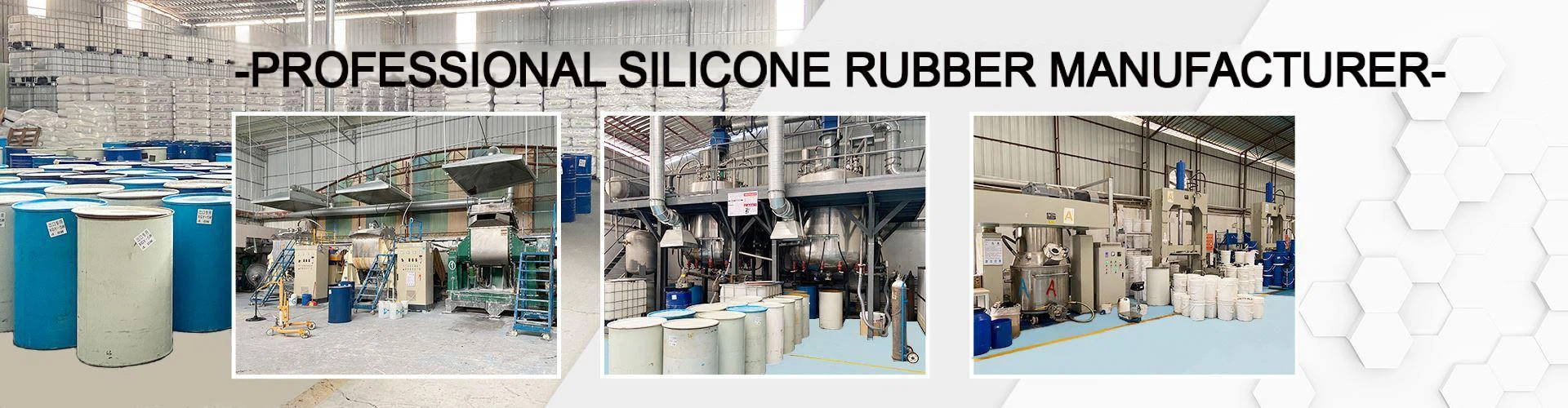


This High temperature silicone rubber is insoluble in water but soluble in toluene, among other solvents. It exhibits excellent characteristics such as low compression deformation and resistance to saturated steam pressure. It is widely used in industries such as aviation, electronics, machinery, and chemicals for manufacturing high-temperature-resistant sealing materials, waterproof and moisture-proof insulation materials. Its physiological inertness also makes it suitable for producing artificial organs, medical tubing, and as raw material for high-temperature mixing silicone rubber.
Properties and Applications
It is used as raw material for high-temperature mixing silicone rubber, wear-resistant oil for shoe soles, and pressure-sensitive adhesives.
Chemical Definition
It is copolymerized from dimethylsiloxane and a small amount of vinylsiloxane, with a small amount of unsaturated vinyl introduced to improve its vulcanization process and product performance. It possesses excellent properties such as low compression deformation, resistance to saturated steam, hydrophobicity, physiological inertness, moisture resistance, electrical insulation, and high-temperature resistance.
Application Industries
1. Silicone Rubber: Basic raw material for mixing silicone rubber.
2. Footwear: Can be used as an additive for TPR, PU, and other elastomers to increase the wear resistance of shoe soles.
3. Chemical Industry: Additive for modified plastics, such as adding a small amount to automotive panels to increase their smoothness.
Mixing Silicone Rubber
It is produced by repeatedly mixing raw rubber with small materials such as white carbon black and silicone oil in a closed kneader. Its excellent electrical insulation makes it widely used in high-temperature cables, power insulators, and other fields. Its low compression deformation and excellent elasticity make it suitable for producing sealing rings, sealing strips, electronic buttons, and other products. Its environmentally friendly properties make it extensively used in silicone bracelets, cake molds, baby bottle nipples, diving masks, spatulas, pressure cooker handles, and other everyday items.
Properties and Applications
Chemical Definition
It is a mixture of long-chain polysiloxane and fillers such as silica, which requires peroxide or platinum curing at high temperature and pressure. It can be used in a temperature range from -50 to +200 degrees Celsius and exhibits excellent aging resistance.
Application Industries
1. Electronics: Buttons, phone cases.
2. Kitchenware: Pot rings, pot handles, spatulas, cake molds, ice trays, silicone gloves, etc.
3. Power Industry: Composite insulators, wires, cables, lightning arresters, etc.
4. Automotive Industry: Sleeves, ignition wires, automotive parts, etc.
5. Sports Equipment: Swim caps, goggles, etc.
6. Sealing Materials: Sealing rings for thermos cups, solar sealing rings, etc.
7. Food and Medical Industry: Baby products, pharmaceutical bottle stoppers, medical devices.
8. Miscellaneous Items: Bracelets, rubber bands, pet mats, etc.
9. Extrusion: Silicone tubes, sealing strips, etc.
Product Overview
Also known as two-component addition-type silicone rubber, it offers better flowability and faster curing compared to mixing silicone rubber and room temperature vulcanization silicone rubber. It can be poured or injected to form various shapes. This product is soft, non-toxic, odorless, and transparent, ensuring high medical and food safety.
Properties and Applications
Liquid silicone rubber finds wide application in industries such as automotive, machinery and equipment manufacturing, electrical engineering, medium and high-voltage power transmission technology, as well as construction, food, healthcare, and medical technology.
Chemical Definition
It is a mixture of long-chain polysiloxane and fillers such as silica. Its excellent flowability provides unique processing advantages.
Application Industries
1. Baby and Child Products: Nipples, baby bottles, teething toys, breathing masks.
2. Automotive: Valves, gaskets, seals.
3. Power Industry: Wires, cables, sheaths.
4. Sports: Goggles, swim caps.
5. Kitchenware: Cake molds, ice trays, steamer liners, spatulas.
6. Electronics: Keypads, electronic encapsulation.
Please note that the above translations are provided to the best of my ability and may require further review by a professional translator for accuracy and specific context.